
A bus roadworthy inspection in Victoria is the annual bus safety inspection the law requires, and only a licensed bus tester can carry it out, meaning one whose licence covers buses. An accredited bus operator must have each bus used to provide a bus service inspected once a year, or at intervals Safe Transport Victoria sets by notice. Each annual inspection has to fall within 14 days either side of the anniversary of the first one. The tester works to the roadworthiness standards the Secretary directs, plus the extra bus standards in the Bus Safety Regulations 2020. A bus that passes is issued a certificate of roadworthiness.
If you hold bus operator accreditation and run one, two or a handful of buses on school, charter or route work, the problem is rarely a noise. It is a date, and whether the tester’s licence covers buses.
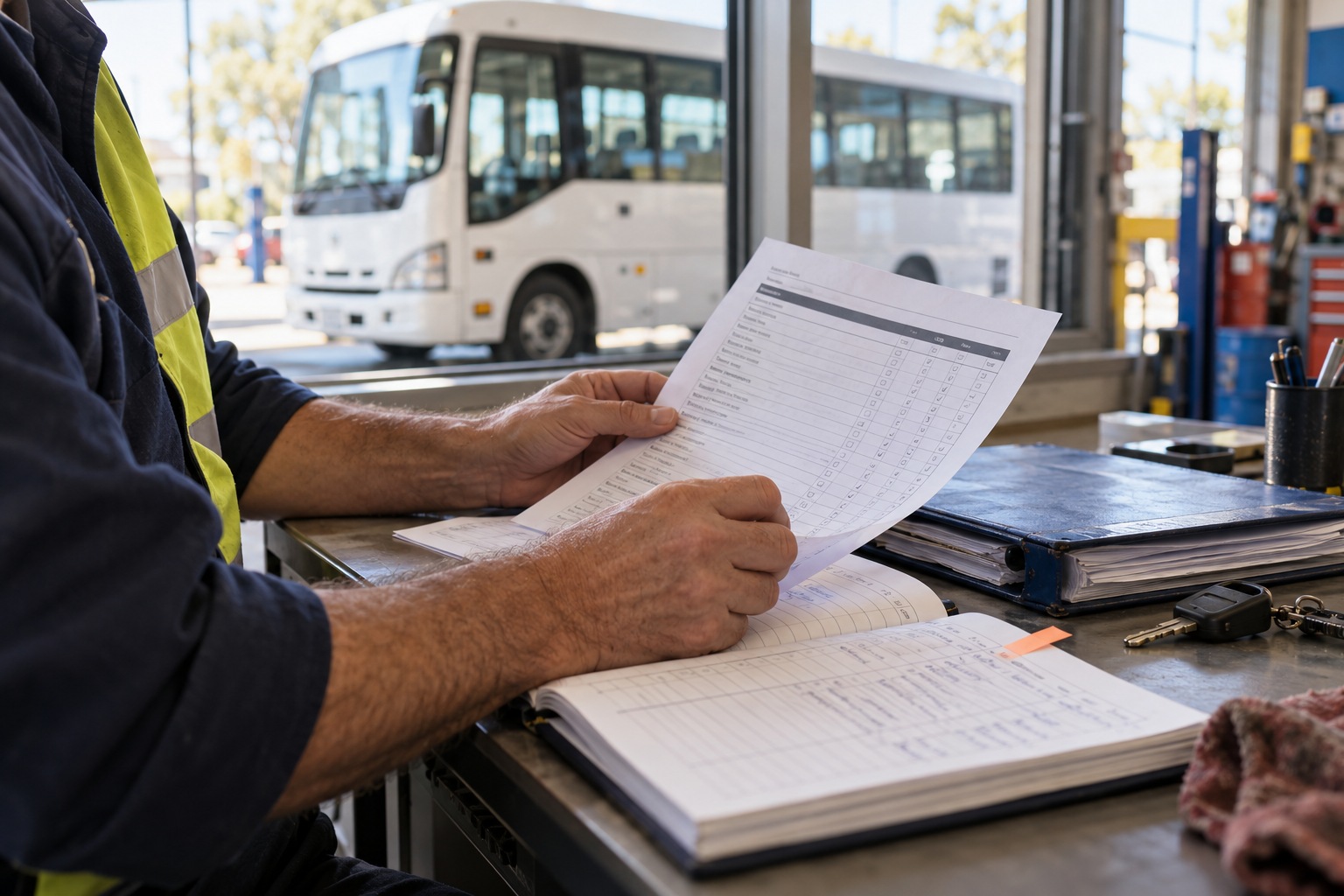
Once a year. Section 19(1) of the Bus Safety Act 2009 puts the duty on the accredited bus operator. Each bus used to provide a bus service must undergo a safety inspection in accordance with the regulations, annually or at prescribed intervals. The penalty is 20 penalty units for a natural person, and 100 for a body corporate. A penalty unit is a fixed amount set in law, and its value changes each financial year.
The Act gives the window word for word. Section 19(1A) says each annual inspection “must be conducted not earlier than 14 days before, and not later than 14 days after, the anniversary of the date on which the first inspection is conducted”. The first inspection is the first one after accreditation, or after the bus was acquired if it came later.
Safe Transport Victoria fills in the rest. The anniversary comes from the date on the initial roadworthy certificate, the one from when accreditation was applied for. Inspect early and that date becomes the new anniversary. Inspect late and the next must coincide with the original date. A brand-new bus needs no annual inspection, because it is roadworthy on registration, and takes its anniversary from the purchase tax invoice.
Pascoe Vale sits between the Tullamarine Freeway and CityLink, a corridor plenty of school and charter work runs through. A bus off the road on a weekday is a run somebody else covers.
One other interval exists. Where Safe Transport Victoria fixes intervals by written notice under regulation 35(3) of the Bus Safety Regulations 2020, regulation 35(4)(b) narrows the window to 7 days either side of the date that interval works out to. Regulation 36 puts the same duty on a specified exempt bus operator, meaning one exempted from accreditation under regulation 26AA.

Only a licensed bus tester, and regulation 35(1) of the Bus Safety Regulations 2020 says so. Regulation 4 defines one as a person holding a tester’s licence under Part 6 of the Road Safety (Vehicles) Regulations 2021. That licence must also authorise them to examine and test buses.
That last part is where operators come unstuck, because a licence is limited by vehicle class. Regulation 242 of the Road Safety (Vehicles) Regulations 2021 requires the Secretary to keep a register of licensed testers. It records the premises each may test at, and the classes of vehicle they may test. Regulation 241 makes a licence non-transferable. So a workshop licensed to test cars is not, by that fact, licensed to test buses. Transport Victoria publishes its roadworthy tester locations, with each tester’s licence number and authorised categories. Those include a bus category, so check before you book.
The quarterly inspections an operator arranges are a different job, and a different person may do them. Regulation 4 calls them vehicle safety inspections: a check that the bus is roadworthy and safe, other than the annual inspection under section 19. Safe Transport Victoria sets out who may do one: a Certificate III in Automotive Mechanical Technology, a completed motor mechanics apprenticeship, an approved overseas equivalent, seven years of approved trade experience, or as its Safety Director determines.
That interval is guidance rather than law. Where an operator has set no alternative, Safe Transport Victoria suggests three months, plus or minus seven days, or a set travel distance. Its page also says “an annual safety inspection (ASI) may now be substituted for one of the required quarterly vehicle safety inspections (VSI)”. The reverse is not allowed.
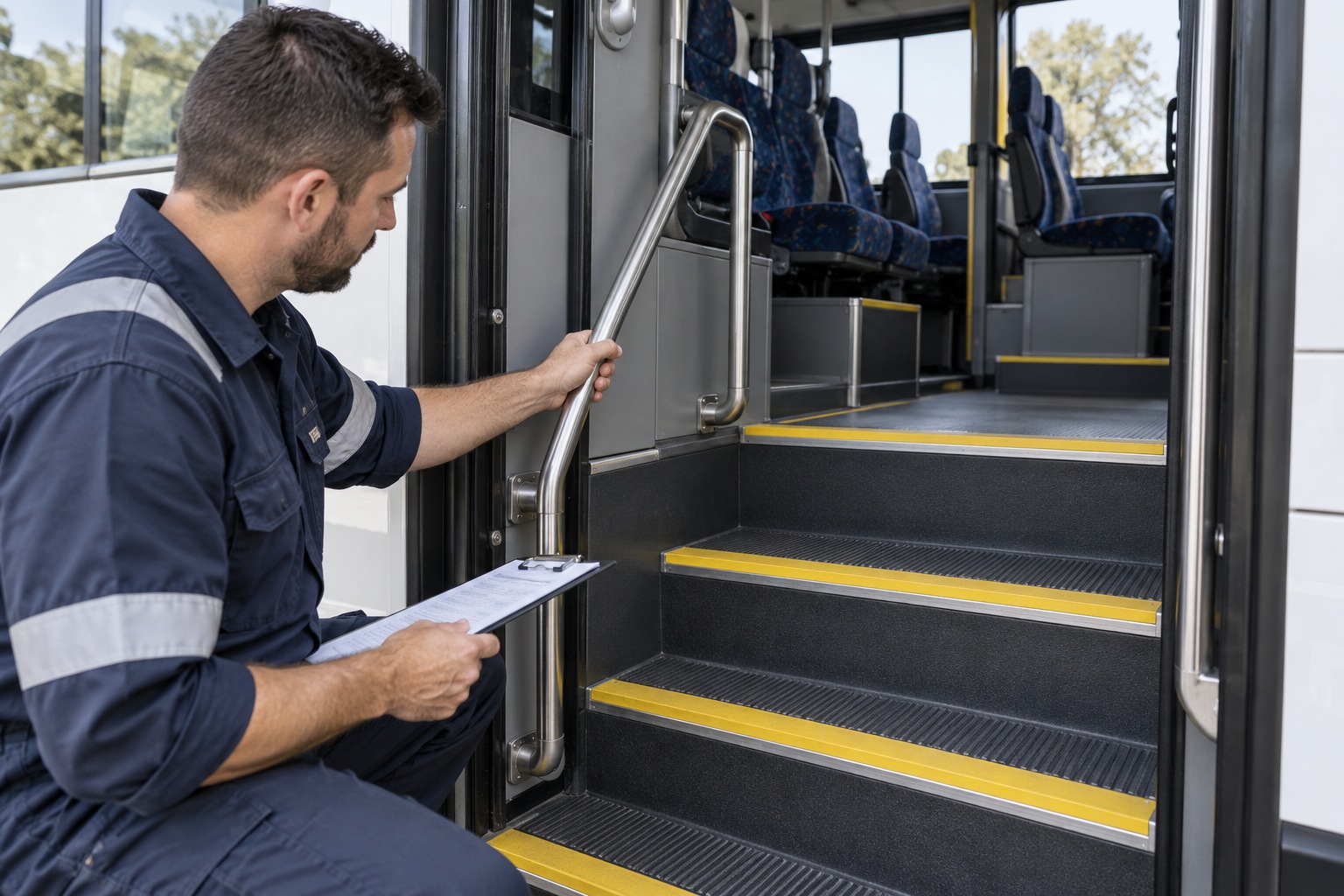
Most of the appointment is ordinary roadworthiness work. The bus-only items sit on top, and they come from Part 4 of VSI 26, the roadworthiness requirements published under the vehicle regulations. Above 4.5 tonnes gross vehicle mass, the maximum loaded weight the manufacturer allows, heavy vehicle standards administered nationally apply as well.
The last four of those apply only to buses subject to the Bus Safety Regulations 2020. The rest of the inspection will look familiar. It covers wheels and tyres, steering, suspension and braking, seats and belts, lamps and reflectors, glass and wipers, the structure of the bus, and other safety related items.
Two items on that list catch older buses more often than anything mechanical does. The structural assessment has to be in the tester’s hand on the day, not promised, and corrosion behind panelling can turn a short appointment into a long one.
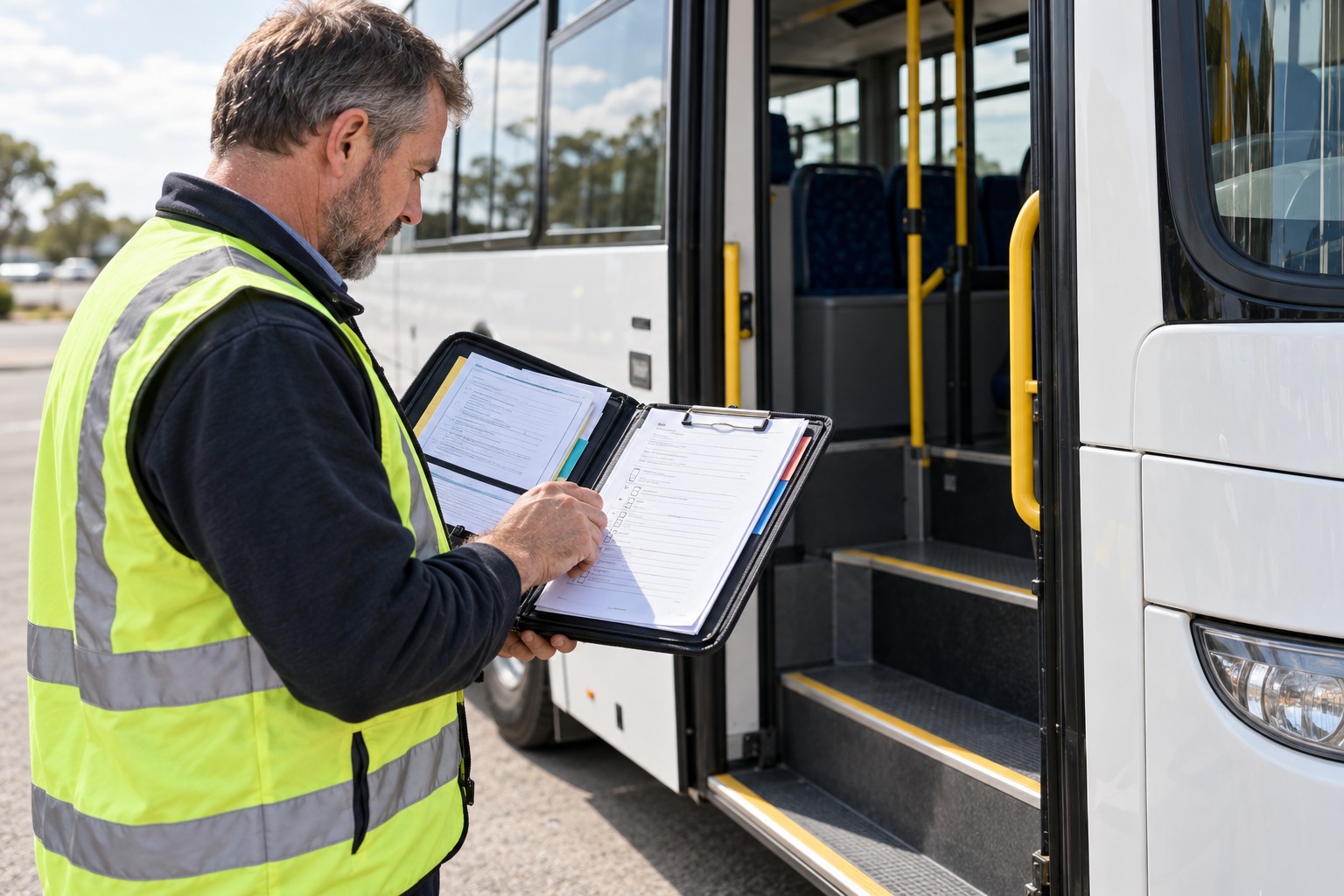
Nothing new has to be bought or arranged for a bus inspection. It is material the operator already holds.
A bus inspected outside Victoria may not need inspecting again. Regulation 37 of the Bus Safety Regulations 2020 lets Safe Transport Victoria exempt an operator where, in its opinion, the bus has had a satisfactory inspection outside the state. Its conditions are published. The bus has to be registered interstate, or registered here and operating interstate. An authorised licensed bus tester has to do the work, to the National Heavy Vehicle Inspection Manual and the relevant Australian Design Rules. Results have to be recorded for each bus. Above 4.5 tonnes the inspection has to include a roller brake test, which measures braking force with the wheels turning on rollers, with its report attached. And a copy has to reach Safe Transport Victoria within five days.
One general rule for licensed testers covers re-tests. Where two examinations and tests happen within 14 days, regulation 249(6) of the Road Safety (Vehicles) Regulations 2021 requires the tester to issue the certificate on the second, if no cause of rejection has been found.

Safe Transport Victoria puts it plainly: “The licensed bus tester will issue a roadworthy certificate or test report listing defective areas; if a test report is issued, no follow-up inspection is needed.” Accredited operators must add the defects to their maintenance management system, the documented system they keep for managing bus maintenance. Defects are fixed before the bus is used again. Records of inspections and repairs are kept.

It is one appointment, not two. VSI 26 Part 2 says a certificate of roadworthiness is generally required when a vehicle is sold or re-registered, “or as part of a mandatory periodic inspection requirement for a bus or taxi”. Safe Transport Victoria says the licensed bus tester issues a roadworthy certificate or a test report. Regulation 38 of the Bus Safety Regulations 2020 joins the two. The tester tests the bus against the standards the Secretary directs, and against the bus standards in the bus regulations. Where those disagree, the bus standards prevail. So the annual inspection is the compliance job, and the certificate is what a passing bus gets. A certificate is current for a transaction for 30 days from issue, not for the compliance year.
Under the Act a bus has seating positions for 10 or more adults including the driver, and is built to the Australian Design Rules for a passenger omnibus. A modified passenger car with more than nine seats is not one.
Three things make the booking call short: the bus’s gross vehicle mass, its seating capacity, and the date of its last inspection. With those in front of you, the 14-day window can be worked out before you ring rather than after. Krupic Auto Repairs carries out bus roadworthy inspections. The fee for a certificate depends on the age, type and condition of the vehicle, so ask what the inspection will cost before you authorise it. If writing suits you better, the contact form takes a preferred date.
No. The licence itself has to authorise bus work, and plenty of testers hold one that does not. The register of licensed testers records the classes each tester may test, which makes this checkable rather than a matter of trust.
The duty in section 19 has not been met, and it carries a penalty in penalty units. Booking late does not move the date either. Next year’s inspection still lines up with the original anniversary, so a late inspection leaves a shorter gap before the next one.
Not always. Safe Transport Victoria can recognise an inspection done outside the state, but only where its conditions are met. Those cover how the work was done and what paperwork reaches the regulator. Treat recognition as something to arrange, not something automatic.
Yes, if it was built to the passenger omnibus rules. The count includes the driver, so 10 adult seating positions is the line. How a sales listing describes the vehicle makes no difference.