Defect notice clearance in Victoria works one way below 4.5 tonnes and another way above it. Above that gross vehicle mass, the most a vehicle may weigh loaded, a truck or bus sits under the Heavy Vehicle National Law, which Victoria applies as its own. The notice will be major, minor or self-clearing, and a major or minor one is cleared by the National Heavy Vehicle Regulator once the vehicle is no longer defective. Victoria’s own clearance regulation still reaches heavy vehicles too, and the notice itself states what clearing it requires.
If you have a notice in your hand and a vehicle you cannot use, most of what you read on this is written for cars and light vans. Pascoe Vale sits between the Tullamarine Freeway and CityLink, in Melbourne’s inner north, and freight and charter work runs through that corridor. A truck is usually defected a long way from its home yard, so the first problem a notice creates is geographic.
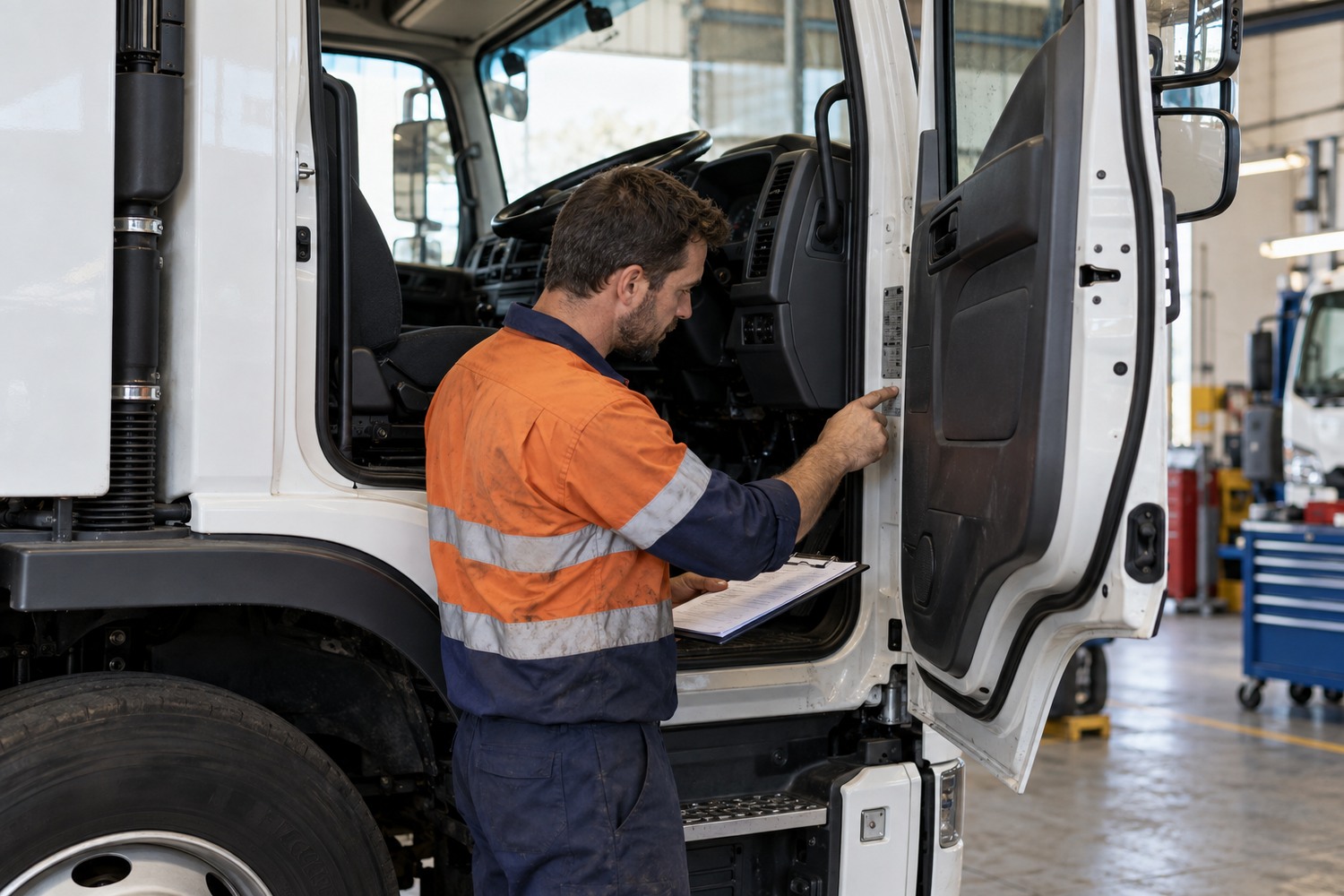
The line is 4.5 tonnes, and the figure that settles it is on the vehicle. The National Heavy Vehicle Regulator defines a heavy vehicle as one with a gross vehicle mass or aggregate trailer mass over 4.5 tonnes. Gross vehicle mass is the maximum a vehicle can weigh fully loaded, as the manufacturer specifies it, and aggregate trailer mass is the same idea for a trailer. Both figures sit on the compliance plate, the metal plate the maker fixes to the vehicle. The regulator’s own examples of heavy vehicles include passenger buses. Victoria draws the same line from the other side. VSI 26, its roadworthiness requirements sheet, covers vehicles of 4.5 tonne or less and sends heavier ones to the national regulator.
So read the plate first. A medium rigid truck usually sits above the line. A workshop or a classified ad calling a vehicle a light truck is not describing the regulatory boundary, and neither is the badge on the front. A bus can sit on either side, because seating capacity and mass are different measurements. The vehicles here are the ones over 4.5 tonnes.
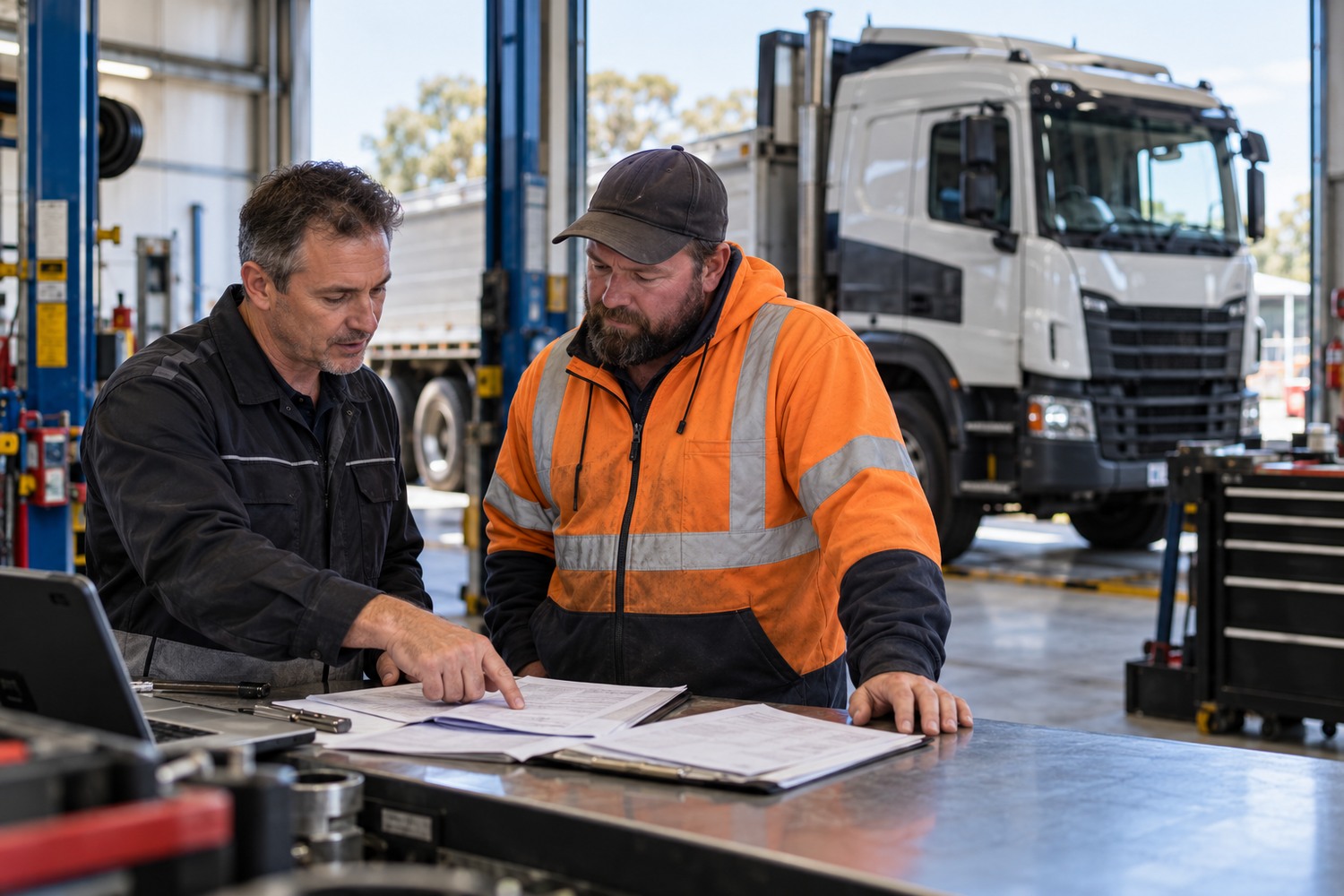
The usual advice describes Victoria’s light vehicle rules, and those rules say so themselves. Part 7 of the Road Safety (Vehicles) Regulations 2021 is headed “Vehicle defect notices for light vehicles”. Its first regulation, regulation 266, reads: “This Part, except regulation 274, does not apply to a heavy vehicle.”
So for a truck or bus over 4.5 tonnes, most of that Part drops away. With it go the Victorian rules on notice types and contents, on giving the notice and fixing a label, on using the vehicle in breach, and on recording the notice. What stands is regulation 274, the clearance regulation, which regulation 266 excepts by name.
Above the line the notice is a heavy vehicle matter. Section 4 of the Heavy Vehicle National Law Application Act 2013 applies the national law here as if it were a Victorian Act, to be known as the Heavy Vehicle National Law (Victoria). So the national law governs how the notice is issued and what may be done with the vehicle, while a Victorian clearance route still reaches it.
Below 4.5 tonnes you are in the light vehicle scheme instead. There the notice carries a label and a time after which the vehicle must not be used, and registration can be suspended if it is not cleared in time.

There are three, and the third is the one general articles leave out. Under section 526 of the national law, an authorised officer who has inspected a heavy vehicle and reasonably believes it defective may issue any of them. An authorised officer is an officer authorised under that law: the regulator’s safety and compliance officers, state and territory transport inspectors, and police.
Corrective action is narrower than repair. Section 527(4) defines it as action that stops the vehicle being a defective heavy vehicle, or corrects an unreadable number plate. A defective heavy vehicle, in the regulator’s words, is one that does not meet the heavy vehicle standards, or has a part that no longer does its job.
Those 28 days are not the 28 days everybody quotes. The familiar one is the light vehicle limit before registration may be suspended. A heavy vehicle major or minor notice carries no fixed number of days at all. Under section 527(1)(j)(i) it warns instead that registration may be suspended and then cancelled if the Regulator does not clear it.
Labels differ as well. Section 528 requires a defective vehicle label where a major notice is issued, and allows one where a minor notice is. Nobody may remove or deface it before the notice is cleared or withdrawn.
Under section 526(4) a driver who is not the operator must pass the notice to the operator as soon as practicable, and within 14 days of issue.
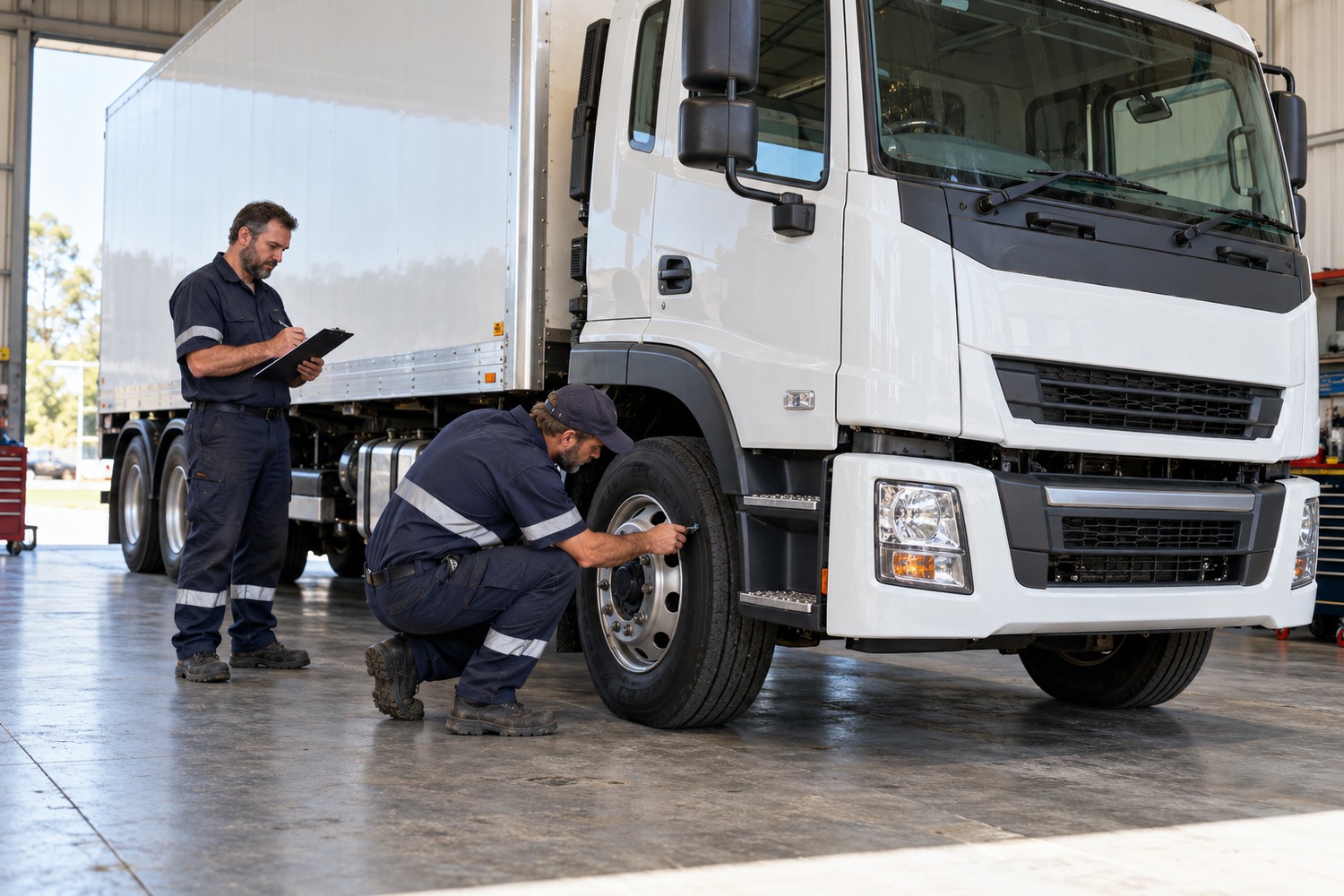
To clear a defect notice, you follow the notice. It states its own clearance requirement, and that is the document to work from. The regulator’s guidance says a major or minor notice names the inspection type required and the type of facility it must be done at. It also names the type of authorised person who must do it, and whether a certificate of roadworthiness is required. That certificate is the pass document a licensed vehicle tester issues.
Defect notice clearance then runs on two tracks, and an operator who knows only one gets stuck. The national track is section 530. The Regulator may clear a major or minor notice if it decides the vehicle is no longer a defective heavy vehicle. It may also clear one if an authorised officer tells it so in the approved form. Where it clears a notice, it must arrange for any label to be removed. A self-clearing notice needs no inspection, the regulator says, but still has to be cleared as the notice instructs.
The Victorian track is regulation 274, the one regulation 266 leaves standing. A notice may be cleared by the Secretary, by another state or territory’s vehicle registration authority, or by an authorised vehicle inspector. The Secretary may carry out an inspection, or require an authorised vehicle inspector to, for two purposes. One is whether the defects described in the notice have been rectified. The other is that the vehicle does not have any other defects. That second limb is the one operators misread: the check is not confined to the items listed on the notice. The notice is cleared once a certificate is issued, or evidence is received that the vehicle is no longer defective, and any label has been removed or defaced.
An authorised vehicle inspector is not the same appointment as a licensed vehicle tester. Regulation 11 lets the Secretary authorise an inspector in writing. A tester, by contrast, holds a tester’s licence and issues certificates of roadworthiness. The two titles look interchangeable and are not. A tester’s licence is limited by vehicle class too. Victoria publishes its roadworthy tester locations with each tester’s authorised categories, so a workshop can be looked up before you book.
Where the notice came from another state, the regulator publishes what Victoria does with it. Heavy vehicles may be presented to HV licensed vehicle testers seeking clearance of interstate issued defect notices. Where the notice indicates a full inspection, the vehicle needs a complete roadworthy inspection and a certificate of roadworthiness. Going the other way, a Victorian notice cleared interstate needs a current certificate of roadworthiness from any jurisdiction, presented at a road authority customer service centre. No Victorian inspection is required.
There is one honest gap in that guidance. The regulator’s clearance table has no row for a notice issued in Victoria and cleared in Victoria, and where both happen here the notice’s own clearance requirement governs. The regulator states the table is correct as at January 2026 and tells operators to confirm with the relevant transport authority.
A fee applies too. Regulation 274(3) requires the relevant Schedule 4 fee, and the schedule carries two clearance items, one for weekdays and one for weekends. The weekend fee is the higher, which is worth knowing before you pick a day.
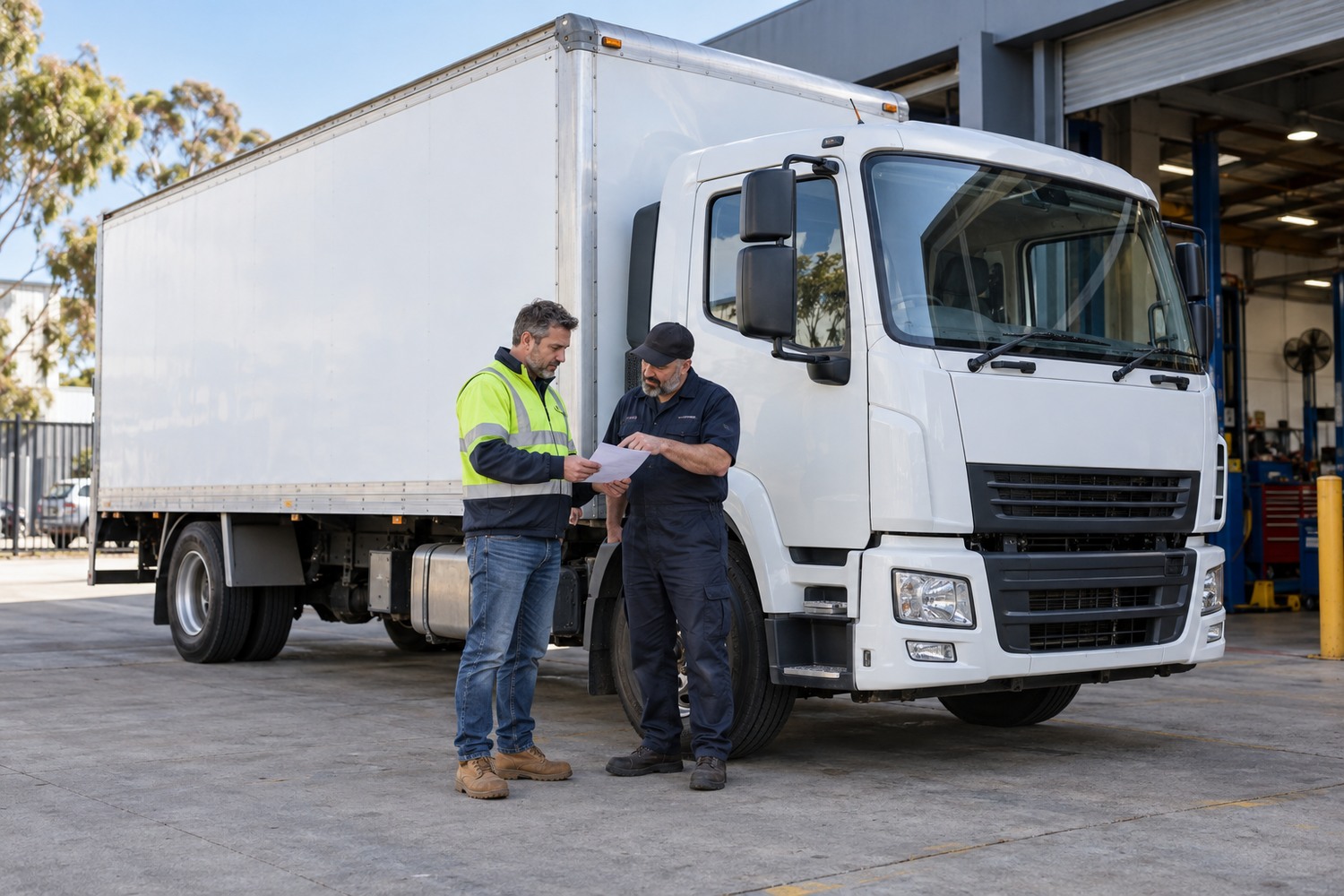
Only where the law or the notice says you may. Section 529 makes it an offence to use, or permit the use of, a heavy vehicle on a road in contravention of a defect notice. The light vehicle list of permitted movements in regulation 272 does not reach a heavy vehicle, so do not work from it. Three routes do.
Those four conditions travel together. The officer sets the time and the way the evidence has to be produced, so the repair paperwork is best kept with the vehicle rather than back at the office.

None of it has to be bought or arranged.
Krupic Auto Repairs carries out defect notice inspections for cars, trucks and buses. The workshop assesses the vehicle against the standards it has to meet, and repairs the listed items on site where needed. Whether that work clears a particular notice depends on the clearance requirement printed on it.
Have three things in front of you when you ring. The gross vehicle mass from the compliance plate, the notice, and the time or day printed on it after which the vehicle cannot be used. Between them they settle the scheme, the deadline and the route back. If writing suits you better, the contact form asks for a preferred date.
Only one of them does. The Victorian Part on defect notices is written for light vehicles and excludes heavy vehicles from everything except the clearance regulation, so above 4.5 tonnes the notice is a heavy vehicle matter under the national law.
It is the category used where the vehicle poses no safety risk, or where a number plate cannot be read properly. It names a day for corrective action, no more than 28 days after issue, and needs no inspection. It still has to be cleared, following the instructions printed on it.
There is no single answer, which is why a flat 28 days is misleading. Only a self-clearing notice carries that outer limit. A major or minor notice has no fixed deadline in the national law, and the pressure comes from the limits on using the vehicle and the risk to its registration.
Sometimes, and it turns on the category. A major notice allows only the moves it sets out, and otherwise an officer can give written permission to drive to and from the repairer. Once the repairs are done, the vehicle may be driven to be inspected if it carries no goods or passengers and the trip poses no safety risk.